
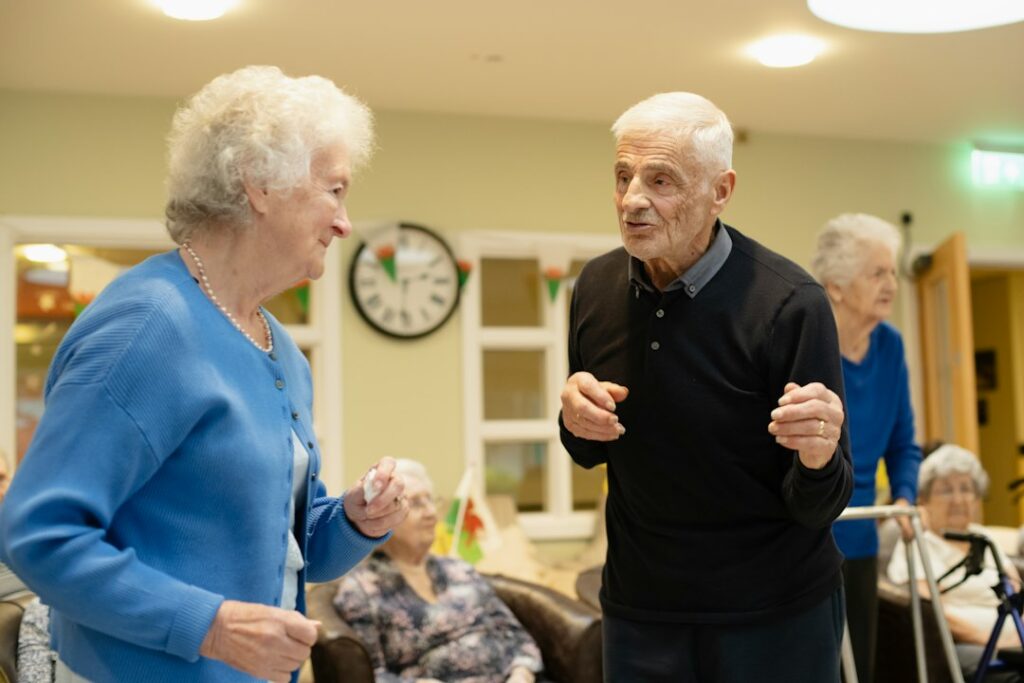
What does healthy aging mean in assisted living?
Healthy aging is not about avoiding every health problem or maintaining the same abilities forever. It means supporting strength, independence, safety, emotional well-being, and meaningful daily routines as needs change.
For residents in Waynesburg, PA, assisted living can provide a helpful setting for maintaining those habits. Shared meals, organized activities, accessible walkways, medication routines, and regular social contact can make healthy choices easier. Residents still play an active role by communicating preferences, noticing changes, and taking part in daily decisions.
How much physical activity is helpful?
Regular movement supports balance, muscle strength, circulation, mood, sleep, and the ability to perform everyday tasks. Exercise does not need to be intense to be useful.
A practical routine may include:
- Walking through indoor hallways or safe outdoor areas
- Seated leg lifts, arm movements, or gentle stretching
- Standing from a chair several times, if safe
- Balance exercises performed near a stable support
- Light resistance exercises approved for the individual’s abilities
- Group movement classes or dancing at a comfortable pace
Short periods of activity can be spread throughout the day. Someone who becomes tired quickly might begin with five minutes at a time and gradually increase activity.
Residents with chest pain, severe shortness of breath, dizziness, a recent injury, or a major change in mobility should pause and report the concern. Exercise plans may need adjustment for arthritis, heart disease, osteoporosis, diabetes, or other health conditions.
How can residents reduce fall risks?
Falls are not an unavoidable part of aging. Many risks can be reduced by combining safe movement, appropriate footwear, good lighting, and regular review of health conditions and medications.
Helpful habits include:
- Wearing shoes that fit securely and have nonslip soles
- Keeping needed items within easy reach
- Using prescribed glasses, hearing devices, walkers, or canes
- Rising slowly from bed or a chair
- Keeping pathways clear of bags, cords, loose rugs, and clutter
- Using handrails and grab bars rather than furniture for support
- Reporting spills, loose flooring, poor lighting, or icy outdoor areas promptly
Winter conditions deserve extra attention in Waynesburg. Snow, sleet, freezing rain, and wet entryways can create changing surfaces around doors, sidewalks, and vehicle drop-off areas. Residents should avoid walking outdoors during hazardous conditions unless the route has been checked and appropriate assistance is available. Wet shoes should be dried before walking across smooth indoor floors.
A fall, even without obvious injury, should be reported. Pain, weakness, confusion, or difficulty walking may appear later.
What foods and fluids support healthy aging?
Balanced meals help maintain energy, muscle, bone health, bowel regularity, and immune function. Older adults may need fewer calories than younger adults but still require nutrient-dense food.
Meals can include:
- Protein such as eggs, poultry, fish, beans, yogurt, or cottage cheese
- Fruits and vegetables in a variety of colors
- Whole grains when tolerated
- Calcium-rich foods for bone support
- Healthy fats from foods such as nuts, seeds, or avocado
- Adequate fluids throughout the day
Reduced thirst is common with age, so waiting until thirst appears may not be enough. Water, milk, soups, and other suitable beverages can contribute to hydration. Fluid limits may apply to residents with certain heart, kidney, or liver conditions, so personal guidance should be followed.
Poor appetite, difficulty chewing, swallowing problems, unexplained weight loss, constipation, or repeated dehydration should be brought to the attention of the appropriate care team. These concerns may be related to medication effects, dental issues, illness, mood, or changes in ability.
Why do sleep and daily routines matter?
Consistent sleep supports attention, mood, memory, and physical recovery. A regular daytime routine can also reduce excessive napping and help the body recognize when it is time to sleep.
Residents may sleep better by:
- Keeping a regular bedtime and wake-up time
- Getting daylight exposure during the morning or early afternoon
- Staying active during the day
- Limiting caffeine later in the day
- Using a quiet, comfortable, and safely arranged bedroom
- Discussing frequent nighttime urination, pain, snoring, or restless sleep

Sleeping poorly is not simply something a person must accept with age. New insomnia, daytime confusion, unusual sleepiness, or a major change in sleep patterns may signal a medical problem or medication effect.
How can residents protect emotional and mental well-being?
Social connection is part of healthy aging. Conversations, shared meals, music, games, religious observance, crafts, gardening, reading groups, and visits with family can provide structure and purpose.
Residents do not need to join every activity. Choosing one or two enjoyable opportunities may be more realistic than maintaining a busy schedule. A person who prefers quiet activities can still benefit from regular contact with others through a short conversation, a phone call, or sitting in a shared area.
Persistent sadness, loss of interest, withdrawal, irritability, hopelessness, appetite changes, or sleep changes deserve attention. Depression is not a normal requirement of growing older. Sudden confusion or unusual behavior may require prompt medical evaluation because infection, dehydration, medication changes, or other health problems can sometimes cause those symptoms.
What health appointments and preventive care should residents track?
Preventive care remains useful in assisted living. Residents and families can keep an updated record of:
- Prescription medicines, over-the-counter products, and supplements
- Allergies and serious medical conditions
- Vaccinations recommended for the individual
- Vision and hearing checks
- Dental care
- Bone health discussions
- Blood pressure, diabetes, or other condition monitoring
- Advance directives and emergency contact information
Medication reviews are especially valuable when a resident reports dizziness, sleepiness, constipation, confusion, or repeated falls. Medicines should not be stopped or changed without appropriate medical direction, but side effects and concerns should be reported promptly.
How can family members support healthy aging without taking over?
The most helpful support usually combines encouragement with respect for personal choice. Family members can ask what assistance is wanted, listen to concerns, and help residents prepare questions for health visits.
Useful questions include:
- Has walking become harder or less steady?
- Are meals enjoyable and easy to eat?
- Is sleep restful?
- Have there been recent falls or near-falls?
- Are medications causing unwanted effects?
- Which activities feel meaningful?
- What would make the room or daily routine safer?
Healthy aging is easier to sustain when routines match the resident’s abilities, interests, culture, and goals. Small observations—such as a new difficulty using utensils, avoiding activities, or leaving meals unfinished—can help identify changes before they become larger problems.
